

How to Treat Mealybugs on a Bird of Paradise (And Keep Them Gone)
If you've spotted little white, cottony fluff tucked into the leaf joints of your Bird of Paradise (or any indoor plants), I've got some good and bad news. The bad news: that's mealybugs, and they don't go away on their own. The good news: with the right approach, your plant can bounce back completely — I've seen it happen many times.
I recently walked through a full mealybug treatment on a Bird of Paradise, episode by episode, over on Instagram. Here's the full story, plus everything you need to treat an infestation yourself.
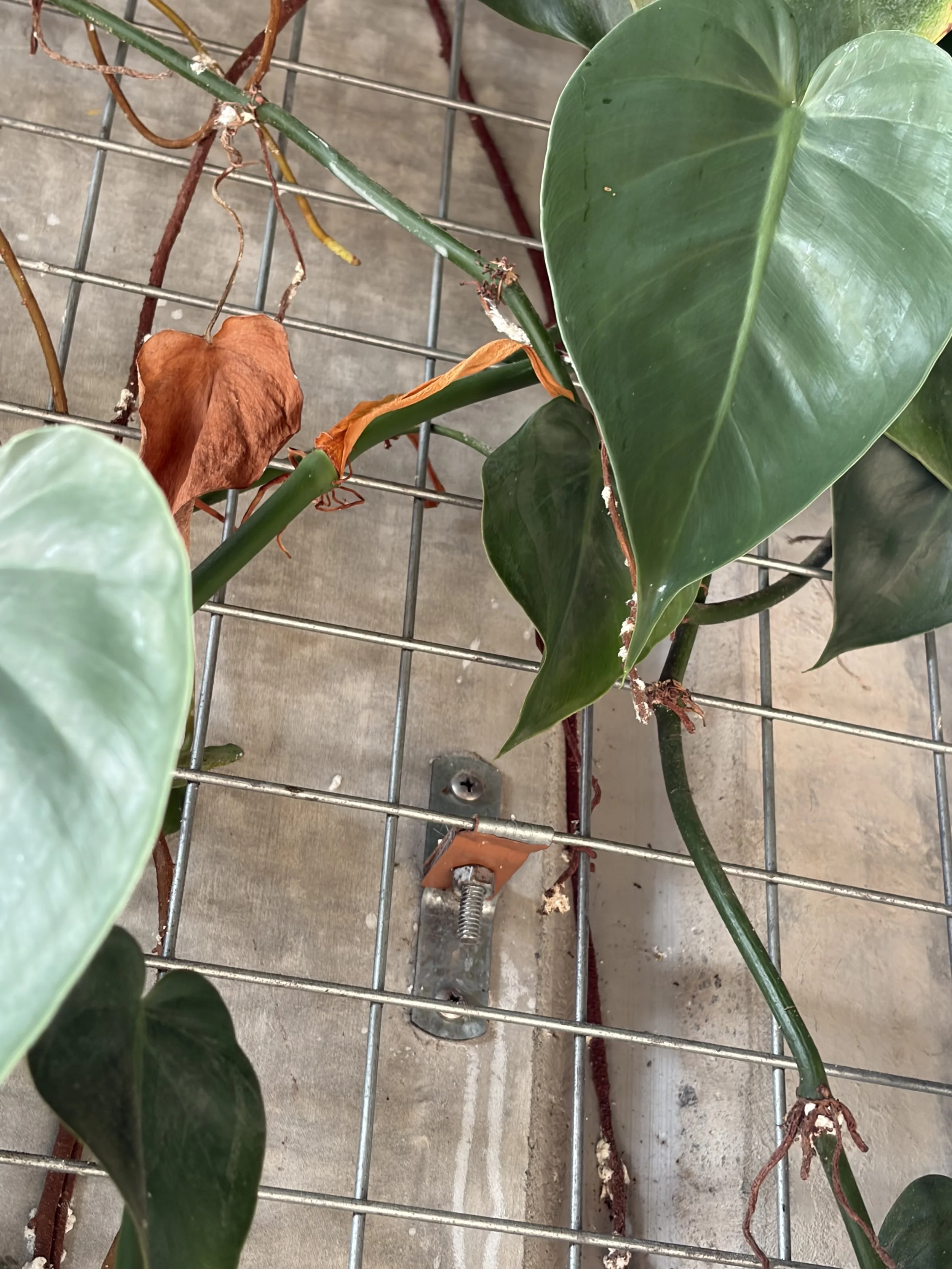
Mealybug Infestation
See this white fluff, it’s not meant to be there and it’s harming your plant!
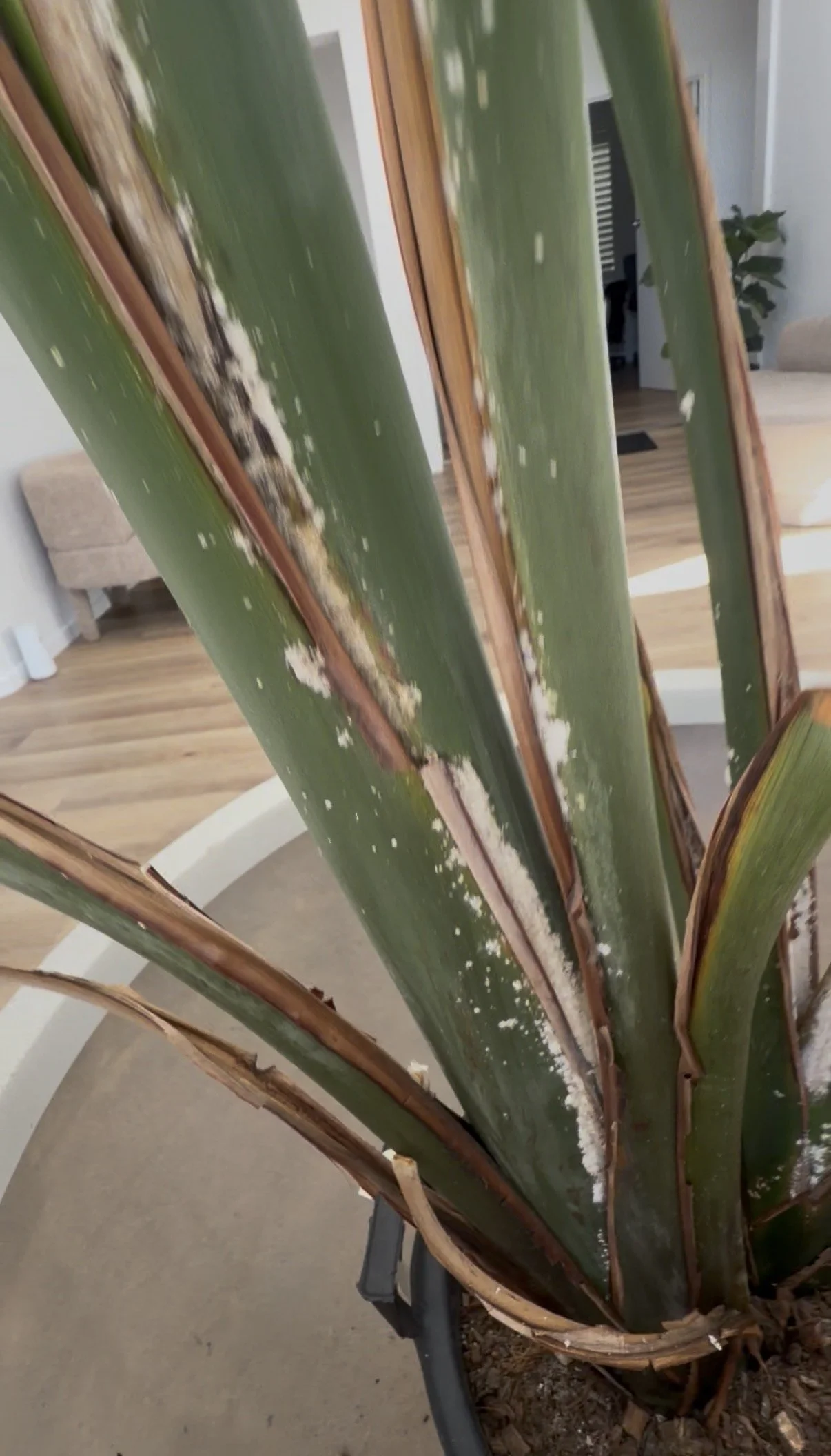
Neglected Strelitzia nicolai.
Episode 1: What are mealybugs, and how did they get here?
Mealybugs are small, soft-bodied insects that cluster in the crevices of a plant — leaf joints, stem nodes, the underside of leaves — and cover themselves in a white, waxy, cotton-like coating for protection. They're sap-suckers, feeding on the plant's nutrients and weakening it over time.
They're usually introduced one of a few ways: a new plant brought into the space that was already carrying them, contact with an already-infested plant nearby, or occasionally hitching a ride on soil, pots, or even a draft from an open window. Warm, humid indoor environments — exactly what a Bird of Paradise loves — are also exactly what mealybugs love, which is part of why this plant is a common target.
See the next project I delivered for this client.
Mealybugs everywhere — leaf axils, stems, undersides. Full takeover.
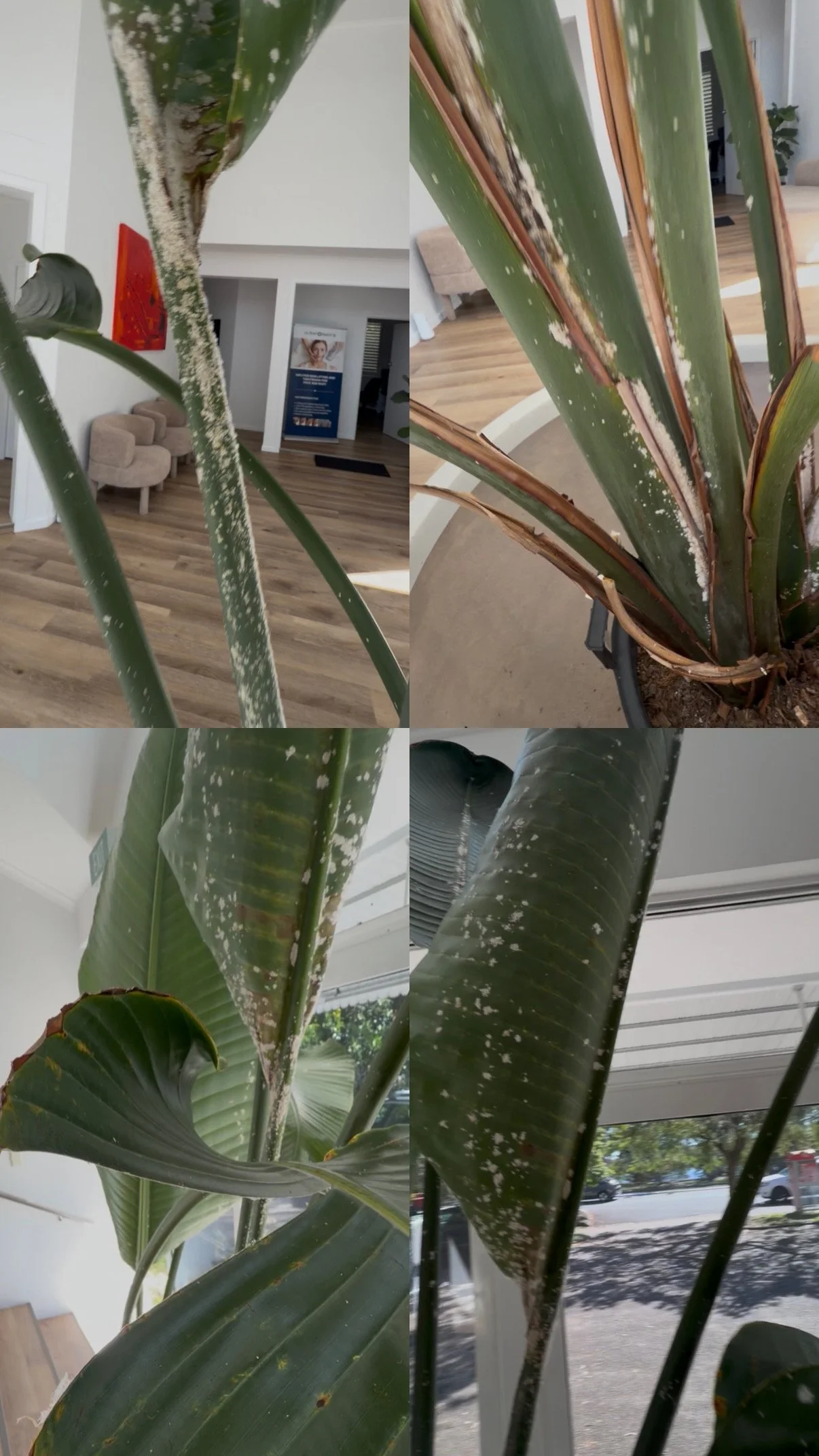
See the extent of this mealybug infestation
All is not lost…
Episode 2: How to identify an infestation
The telltale sign is that white, fluffy residue, often mistaken at first glance for mould or dust. Look closely at:
Leaf joints and stem junctions
The underside of larger leaves
New growth points, which are often the first target
Other signs to watch for: sticky residue on leaves or the surrounding surface (a byproduct called honeydew), yellowing or curling leaves, and slowed or stunted new growth. If you catch it early, treatment is far easier — which is why a regular once-over of your plants, especially in warmer months, is worth building into your routine.
Time to fight back. Isopropyl alcohol is one of the most effective first-line treatments for mealybugs — here's exactly how I use it.
Episode 3: Step-by-step treatment
Once you've confirmed mealybugs, here's the approach I use:
Isolate the plant if possible, away from other greenery, to stop the infestation spreading.
Wipe down visible clusters using a cotton pad or soft cloth dipped in isopropyl alcohol (diluted, roughly 70%) — this dissolves their waxy coating and kills them on contact.
Treat the whole plant, not just visible spots — mealybugs hide in joints and creases you might miss on a first pass.
Follow up with a horticultural oil or insecticidal soap spray, covering the plant thoroughly, including the undersides of leaves.
Repeat every 5–7 days for at least three treatments — mealybug eggs can survive an initial treatment, so a single pass usually isn't enough.
Prune away badly affected leaves or growth if the infestation is severe in one area, to reduce the population quickly.
Patience matters here. A stubborn infestation can take several weeks of consistent treatment to fully clear — but a Bird of Paradise is a resilient plant, and with consistency, recovery is very achievable.
Episode 3: Step-by-step treatment
Once you've confirmed mealybugs, here's the approach I use:
Episode 4: Preventing mealybugs from coming back
Once you've cleared an infestation, a few habits go a long way toward keeping it that way:
Inspect new plants closely before bringing them into your space, and consider a short isolation period for anything new
Avoid overwatering — mealybugs are drawn to stressed, overly moist conditions
Keep leaves clean with an occasional wipe-down, which also lets you spot early signs before they spread
Maintain good airflow around your plants, rather than crowding them tightly together
Don’t forget the Neem Oil
Episode 5: Ongoing Care - Ants were a part of the problem
Just when this Bird of Paradise looked like it had turned a corner, one more culprit revealed itself — ants.
Ants and mealybugs have a well-known relationship in the plant world, and not a good one for your plant. Mealybugs produce a sweet, sticky substance called honeydew as they feed — and ants love it. In exchange for that steady food source, ants will actively protect mealybugs from predators and treatment, and even carry them to new parts of the plant to keep the "farm" going.
In other words: as long as ants are present, a mealybug infestation can be far harder to fully clear — no matter how thorough the treatment.
What this means for treatment:
Ants need to be addressed alongside mealybugs, not treated as a separate issue
Look for ant trails leading to and from the plant, not just on it
A telltale sign to watch for: small mounds of soil being pushed up and out of the pot — a sign ants have moved into the fresh soil itself, not just the plant above it
Treating the mealybugs without addressing the ants can mean the infestation keeps returning, even after repeated treatment
This was the final twist in this Bird of Paradise's recovery story — proof that a full plant rescue sometimes means looking beyond the obvious pest.
Some infestations, especially on larger commercial installations or plants that have been left untreated for a while, need more than a DIY approach — particularly if the plant is part of a styled space where appearance and plant health both matter for the business behind it.
Curious about ongoing plant care as part of a commercial plant hire package? Head to my FAQ page for more on how maintenance is handled, or explore plant hire, event hire and styling services across the Sunshine Coast.
This is exactly the kind of work I do through ongoing plant care and maintenance — regular health checks that catch issues like this before they take hold, and hands-on treatment when they do. If you'd rather not manage this yourself, or you're looking after plants in a commercial or styled space, get in touch and I'll take care of it. See my services list here.
